Auckland's New Transport Overlords: Accountability or Just a More Political Mess?
Auckland has killed the old Auckland Transport model and replaced it with the Auckland Regional Transport Committee, a Council delivery directorate, and a slimmed-down public-transport CCO. The architecture is cleaner. Whether the culture and the politics deliver better outcomes is the only question that matters.
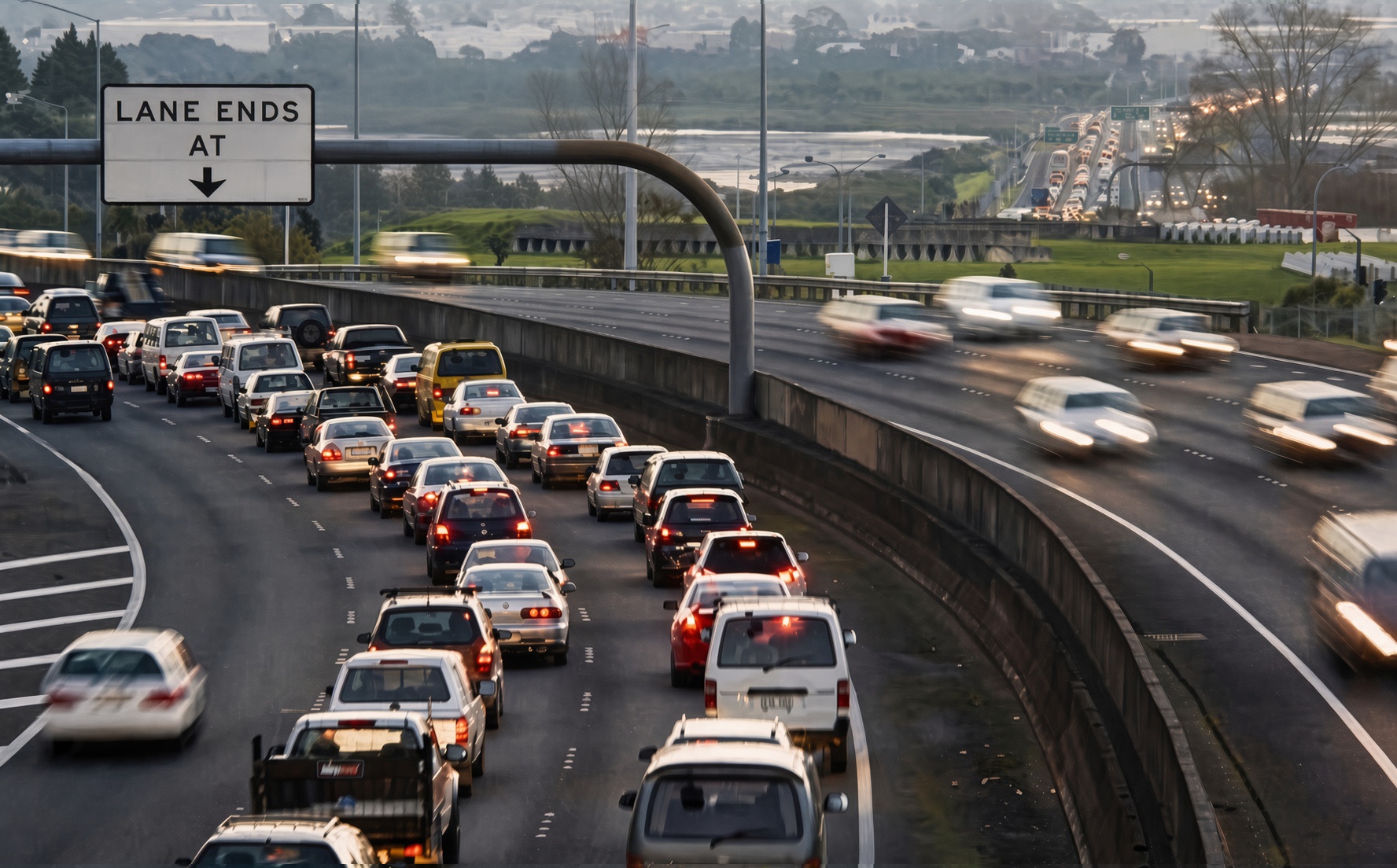
Auckland has finally killed the old Auckland Transport model. The independent board that once controlled the city's roads, planning and public transport is gone. In its place sits a new power structure built around the Auckland Regional Transport Committee (ARTC), a Council-run Transport and Infrastructure Delivery directorate, and a stripped-back public transport CCO that still carries the AT name.
This is the biggest reset of Auckland's transport system since the Super City was created. Whether it produces better outcomes or simply moves the same people into a more political environment is now the only question that matters.
What the new body actually is
The centrepiece is the Auckland Regional Transport Committee. Created by the Local Government (Auckland Council) (Transport Governance) Amendment Act 2026, the ARTC is a joint Council–central government body. Its core jobs are to prepare a 30-year Transport Plan for Auckland and the Regional Land Transport Plan. Both require dual approval: Auckland Council and the Minister of Transport.
Alongside it, most of the old AT's functions have been pulled inside Auckland Council under a new Transport and Infrastructure Delivery directorate. Roughly 1,350 staff are transferring there. The remaining ~650 stay in a much narrower AT focused solely on running buses, trains and ferries.
Local boards gain clearer powers over local streets: speed limits, parking, crossings and similar decisions. The theory is simple:
- Elected people make the strategy.
- A delivery agency runs the services.
- Central government and Council plan the long game together.
The case for the change
Supporters argue the old model was broken. An independent board spent ratepayer money and shaped the city while remaining largely insulated from voters. Public trust in AT was chronically low. Mayor Wayne Brown repeatedly described an organisation the public "loathed" that kept building projects people did not want. Returning strategy and road-controlling powers to elected members, the argument goes, restores democratic accountability. Integrating transport planning with land-use and housing decisions inside one organisation should reduce the classic Auckland failure of intensifying housing without matching network capacity.
A pure public-transport CCO, free of the broader road and strategy battles, can be held to tighter operational targets: reliability, punctuality, and extracting value from the City Rail Link once it opens. The ARTC is meant to end the annual funding scrap between local and central government by locking both into a shared 30-year direction.
On paper, the architecture is cleaner. Decision rights are clearer. Lines of accountability run back to the ballot box.
The hard problems that remain
None of this changes the people doing the work. The same engineers, planners, project managers and contract administrators are largely transferring across. Institutional culture, risk appetite and delivery habits move with them. If the old AT's weaknesses were slow prioritisation, weak performance culture or an inability to make hard trade-offs on road space, simply changing the employer does not automatically fix those weaknesses.
The numbers make this clear. Of nearly 2,000 AT staff, around 650 remain in the slimmed-down public transport CCO. More than 1,350 transfer into the new Council directorate. After disestablishing about 180 roles and creating replacement positions, the net reduction is only around 20 jobs. Very few people have actually left. The culture is not being broken up or renewed. It is being relocated almost intact from one organisation into another.
The transition itself is a major operational risk. Moving more than 1,350 staff, systems, contracts and institutional knowledge while keeping the network running is not a tidy administrative exercise. Senior attrition was already visible during the design phase. Distraction and temporary productivity loss are almost inevitable through the end of the formal transition in October 2026 and into 2027.
There is also a political risk the reformers underplay. An independent board could (in theory) make unpopular technical decisions. Elected members and local boards face short-term electoral incentives. Road-space reallocation, prioritising bus reliability over car convenience, or standardising designs for speed and cost can become harder, not easier, when every decision is more directly political. Local boards vary widely in competence and capacity. The result could be inconsistency rather than responsiveness.
Finally, structure does not buy more capacity, better maintenance, or faster consenting. No new funding accompanies the reform. Outcomes will still depend on prioritisation, contract management, and the willingness to enforce performance on the residual public-transport CCO.
The real test
The new body will be judged on three practical measures over the next three years:
- Does network reliability and journey-time performance improve, especially once the City Rail Link is operating?
- Does the combination of Council control and the ARTC produce faster, more coherent decisions on network optimisation and growth-supporting infrastructure?
- Does the public notice a difference, or does trust remain low because the same problems persist under new branding?
The legal framework creates clearer accountability and better formal integration. That is real. Whether those advantages overcome the risks of transition disruption, political short-termism and unchanged organisational culture is still unproven.
Auckland has swapped an unaccountable professional agency for a more democratic but more political system. The new body has the power to improve outcomes. It also has every opportunity to deliver the same results with more process and more politics attached. The next two years will show which path it takes.
Join the discussion
Community members are invited to add perspective, evidence, or a sharp question. Be specific and keep it civil.