Bread and Circuses: Auckland’s Preferred Distraction
Auckland has perfected a modern version of panem et circenses — major events and waterfront spectacles occupy a privileged place in the official story of the city while the harder numbers on growth, employment and housing tell a different one. Fix the foundations first.
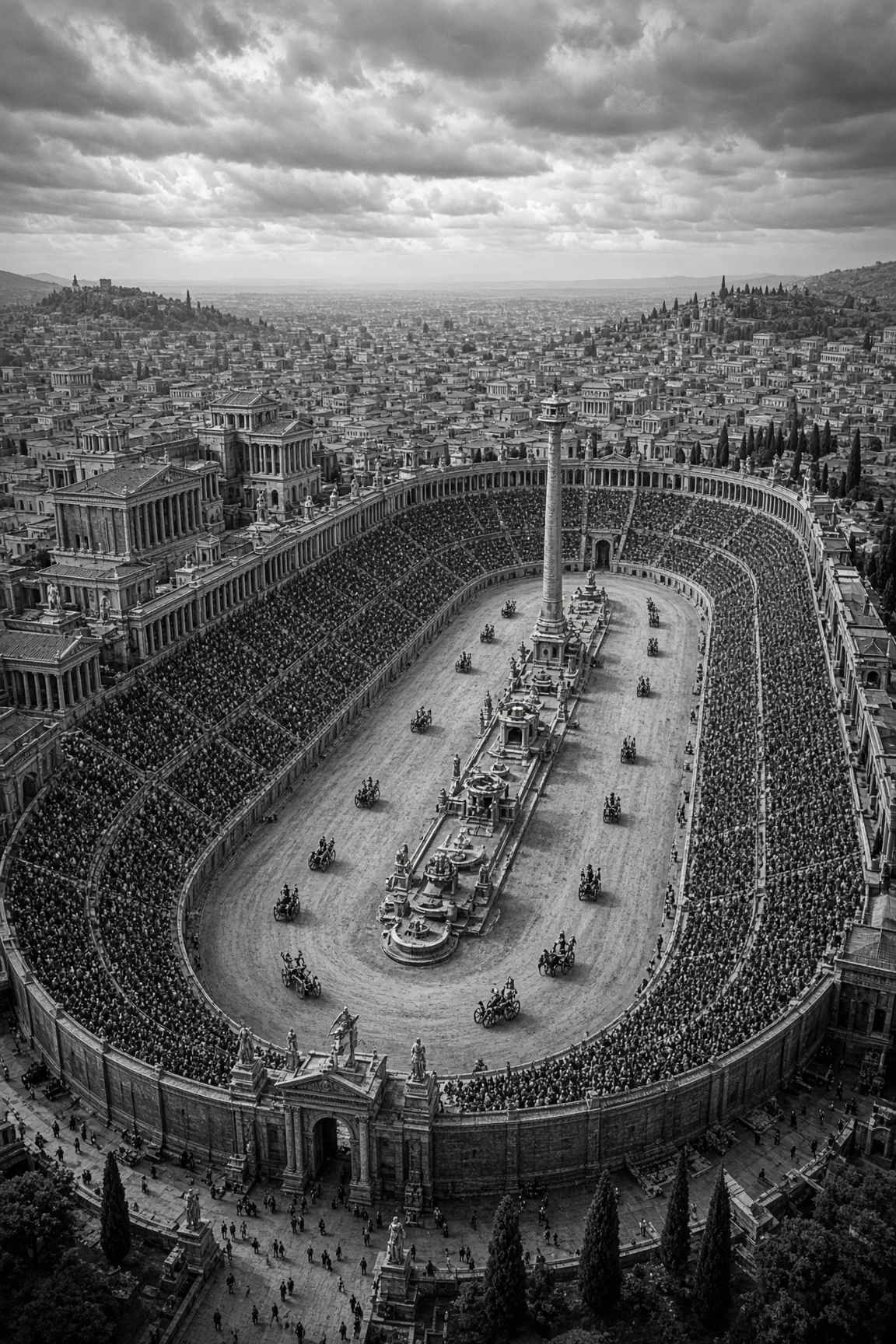
Juvenal saw it clearly two thousand years ago. When a city no longer produces real power or shared prosperity, its rulers turn to panem et circenses, bread and circuses. Feed the people just enough and keep them entertained, and they will stop asking harder questions about who holds the real levers and why the foundations keep cracking.
Auckland has perfected a modern version of the same formula. Major events, cultural festivals, waterfront spectacles, stadium concerts and “vibrancy” activations now occupy a privileged place in the official story of the city. Council agencies celebrate the GDP numbers these events supposedly generate. Eden Park’s contribution is quantified. Festival attendance is counted. Temporary visitor spend is treated as evidence of economic vitality. The photographs look good. The press releases write themselves. The political risk is low.
Meanwhile the harder numbers tell a different story. Real GDP growth in Auckland for the year ended March 2026 sat at 0.2 percent. Employment has contracted for consecutive quarters. Unemployment reached 6.6 percent, levels not seen in more than a decade. House prices remain historically elevated relative to incomes even after the post-2021 correction. Rates continue their upward march. Infrastructure backlogs persist. These are not the metrics of a city whose prosperity is being driven by events. They are the metrics of a city that has grown comfortable treating symptoms as strategy.
Urban economics is unambiguous on the hierarchy of causes. Cities create wealth through agglomeration, the dense interaction of skilled people and firms that raises productivity, accelerates innovation and lifts wages. That process is fragile. It requires housing supply that does not systematically price talent out of the labour market. It requires transport and core infrastructure that keep effective density high rather than converting it into congestion and separation. It requires a regulatory and fiscal environment that does not steadily raise the cost of employing people or operating a business. It requires basic order and credible property rights so that investment remains rational. Events sit downstream of all of this. They can amplify a city that is already productive. They cannot substitute for missing productivity.
The academic literature on stadiums, festival strategies and entertainment-led development is extensive and mostly sobering. Public subsidies are high. Multipliers are routinely overstated. Benefits are often highly localised. Opportunity costs, the infrastructure, skills programmes or regulatory reform that never received the same political attention, are rarely measured. Cities that lean hardest on the circus while their underlying productivity and housing systems stagnate are following a well-documented pattern, not inventing a clever new model.
New Zealand law does not require this prioritisation. Section 10 of the Local Government Act 2002 is explicit. The purpose of local government is to enable democratic local decision-making and to promote the social, economic, environmental and cultural well-being of communities in the present and for the future. The four well-beings are not a menu from which council may select the easiest option. Economic well-being is not discharged by episodic visitor spend if the conditions for sustained productivity growth remain constrained. Cultural well-being is not the same thing as a calendar of spectacles. The Auckland Plan 2050 itself frames opportunity and prosperity around innovation, skills, investment and raised productivity. Events appear as one tool among many. When they become the dominant public narrative and a disproportionate claim on political attention, the legal obligation has been narrowed in practice even if the statutory language remains intact.
The practical pathways for correction exist inside the same legal framework. Central government has already imposed housing growth targets and feasibility requirements on Tier 1 councils. Auckland must enable thirty years of feasible capacity under high growth projections and monitor whether price indicators between rural and urban land continue to deteriorate. Plan-making detail, consenting culture and infrastructure sequencing remain local responsibilities. Formal submissions on plan changes, the Long-Term Plan and the Annual Plan, combined with targeted Local Government Official Information and Meetings Act requests for modelling assumptions and feasibility data, are the ordinary democratic instruments. Local boards still hold meaningful influence over place-based priorities. Holding the economic development functions now inside Council to measurable outcomes on business cost, skills and talent retention, rather than event GDP alone, is both legitimate and overdue.
None of this requires hostility to festivals or concerts. A city without shared celebration is poorer for it. The problem is substitution. When the circus becomes the default answer to questions of prosperity, the harder work of enabling density, reducing friction and protecting the productive core of the city is deferred. Rome discovered, too late, that bread and circuses could pacify a population while the capacity that had once produced both bread and power quietly disappeared. Auckland still has time to choose differently. The data, the law and the economics all point the same way. Fix the foundations first. The circuses can wait.
Join the discussion
Community members are invited to add perspective, evidence, or a sharp question. Be specific and keep it civil.