CRL Fails East, West Auckland and Onehunga: A Costly Short-changing of Ratepayers and 140 Years of Connectivity
A Costly Short-changing of Ratepayers and 140 Years of Connectivity
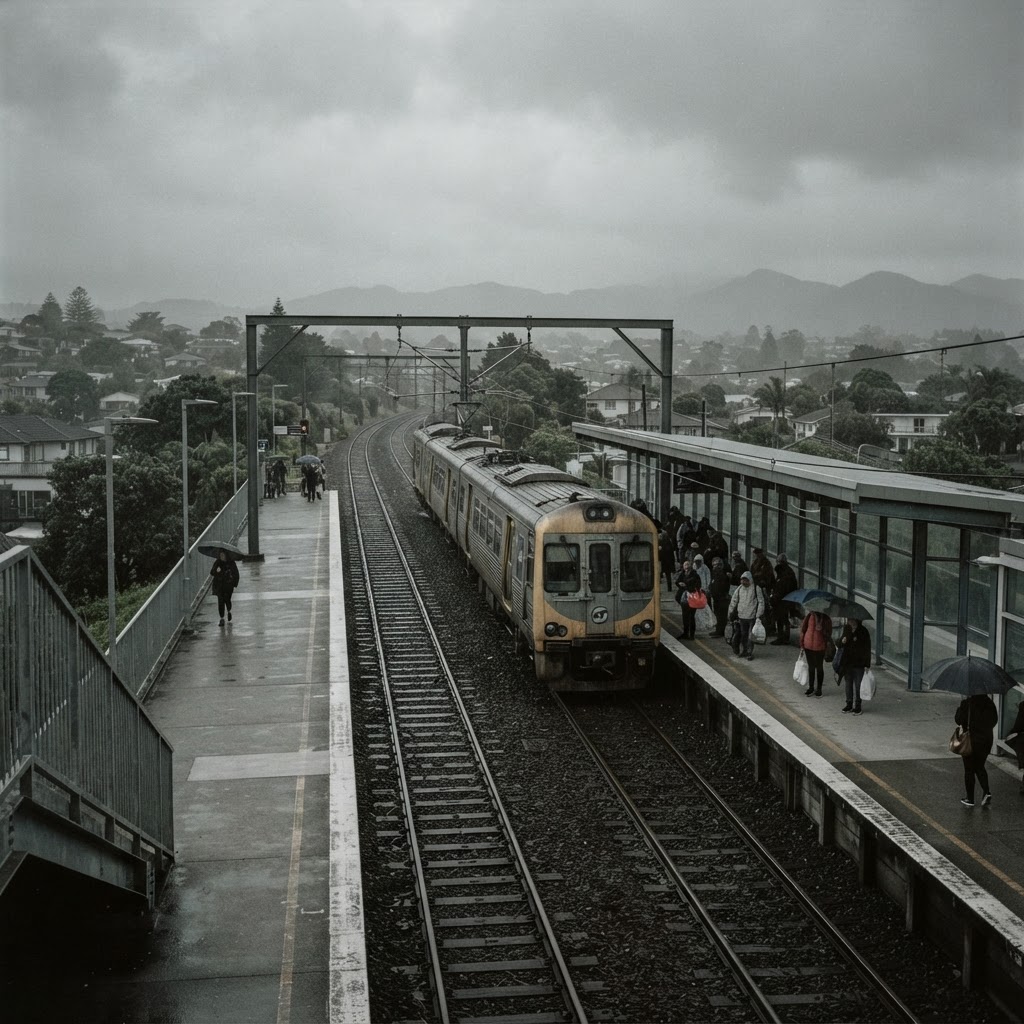
Auckland Transport's proposed Metro rail timetables for the post-CRL era delivers bitter disappointment for residents of Onehunga, the Eastern suburbs and West Auckland. After years of hype about a transformative "connected" network, AT's Selected Service Pattern for the rail network will see:
- every train on the Southern Line stopping at Newmarket Station not once, not twice, but three times!
- no train on the Eastern Line and no train on the Western Line stopping at Newmarket Station, ever!
- no train from the Onehunga Branch stopping at any of Karanga-a-Hape, Te Waihorotiu or Waitemata Stations, ever!
For over 140 years, Western Line passengers have travelled straight through to Grafton, Newmarket, and Parnell. Under the new plan, all peak hour services from the West will dive into the CRL at Maungawhau Station, stopping at two shiny new underground stations before continuing east to Glen Innes, Otahuhu, and Manukau, and back again. Direct links to critical destinations, hospitals, schools, universities at Grafton Station and Newmarket's commercial heart will vanish for tens of thousands of travellers from the West and will never materialise for travellers from the East, as such links should materialise given the extraordinarily high $5.5 billion cost of the CRL and a decade of CRL disruption. Travellers from the West will now face inconvenient and slow detours to Karanga-a-Hape station or slow bus transfers during peak hours, with only limited off-peak relief from only as far Henderson.
For example, the AT Journey Planner shows that once the CRL opens, in off peak times, it will take 8 minutes to travel from Kingsland Station direct to Newmarket Station on one of the two trains per hour headed for Onehunga. However, travelling from Kingsland to Newmarket at peak times will require a transfer at distant Karanga-a-Hape Station and will take between 18 and 24 minutes i.e. a journey that takes between 2.25 and three times as long as the direct service.
Public transport users prefer to have a "one-seat" ride without a transfer. Many users will make one transfer to complete a journey. However multiple studies show that if people are required to make two transfers to complete a trip, demand collapses. Many people in Auckland travel by bus to and from a rail station to transfer to or from a train. It is of primary importance that these passengers, and all passengers, are provided with:
- a direct service to all five key inner-city stations from all other stations; and
- a direct service from all five key inner-city stations to all other stations.
The 2015 CRL Business Case Service Pattern, upon which the CRL was built, was abandoned on a whim in March 2021. However, the Business Case Service Pattern, with a tweak, does deliver trains from the Southern, Eastern and Western Lines, and the Onehunga Branch, directly to all five key inner city stations, Newmarket, Grafton, Karang-a-Hape, Te Waihorotiu and Waitemata, every time, maximizing the return to Auckland and New Zealand for the $5.5 billion spent and the disruption endured.
The Business Case Service Pattern, with a tweak, achieves this by:
- through running the Southern Line with the Eastern Line
- running the Western Line through the CRL Loop alternately clockwise and anti-clockwise
- running the Onehunga Branch through the CRL Loop clockwise only
Since early 2026 Councilor Ken Turner has been advocating this service pattern to Auckland Transport and latterly the Mayor and Government.
This all stings very hard against the backdrop of Auckland's looming rates hikes. For 2026/27, average residential properties face a 7.9 percent increase (around $320 annually), with businesses hit harder at 9.84 percent. The primary culprit? CRL's 235 million dollars annual costs made up of:
- $167 million per year interest on the $2.25 billion borrowed. Council has no plan to repay the capital of the loan so this cost will likely continue indefinitely
- $42 million per year depreciation on elements of the CRL that in time will need replacing e.g. tracks, signalling and electrical systems, not the tunnels themselves
- $26 million additional operating costs including the cost of additional trains the CRL has enabled and the cost of operating them
Aucklanders are being forced to pay for a network that delivers them substandard service. Under the Local Government Act 2002 (Section 14), councils must pursue equitable, efficient, and responsive services that reflect community needs. The Land Transport Management Act 2003 demands integrated networks that enhance accessibility and reliability. Forcing slow transfers and longer effective journeys for major population segments stretches these principles beyond breaking point.
The City Rail Link is being sold as Auckland's great unifier, a project that will finally knit the region together. Instead, the selection of the current timetable proposal will create frustration, disappointment and division.
Service patterns can be changed. We call for change, this Christmas / New Year, from what we will be given to what we should have been given, the service pattern that the CRL was built to deliver.
Take Action Today
- Contact Auckland Transport: CityRailLink@at.govt.nz.
- Join the City Builders Association advocacy: www.citybuildersassociation.org or phone 021 737 826.
- Follow and support advocate Ken Turner for ongoing analysis and campaigns.
- https://www.facebook.com/share/v/18ndY8g4yT/
- https://www.facebook.com/share/v/1VP4tdECUP/
This is not just about trains. It is about fairness in a city where everyone pays but the best outcomes are not delivered. Auckland Transport, do better.
Join the discussion
Community members are invited to add perspective, evidence, or a sharp question. Be specific and keep it civil.